
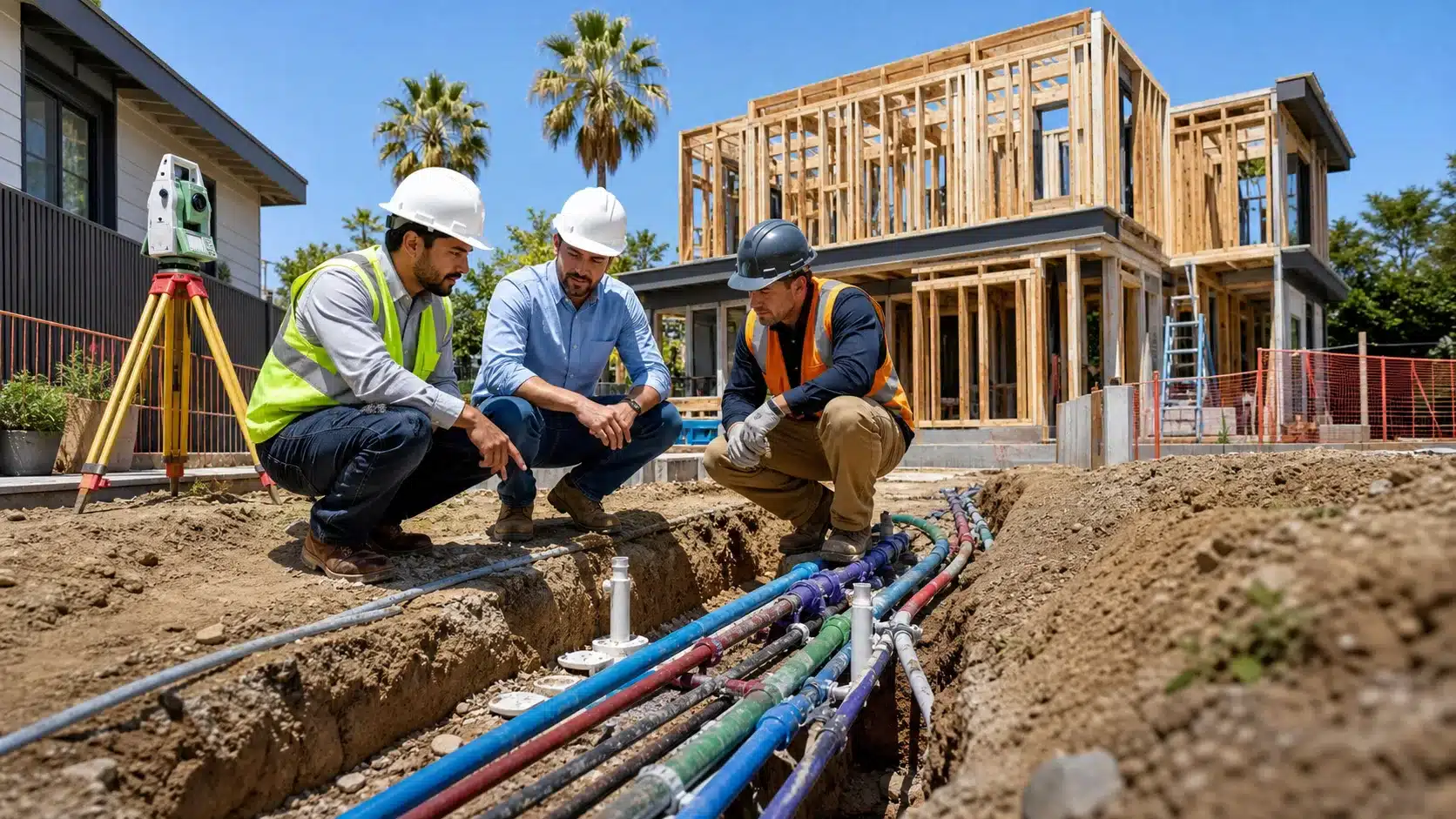
ADU construction in Los Angeles can run into surprises underground, even when the plans look perfect on paper. One of the biggest trouble spots is hidden utilities, like old sewer lines or shallow gas pipes sitting right where your new ADU wants to go. Knowing how these conflicts happen, how pros handle them, and what it means for your project can save a lot of stress.
We build ADUs across the Los Angeles area, and we see this issue often enough that we plan for it from day one. Utility conflicts do not have to ruin your budget or your timeline. With the right planning and a calm, clear process, you can still get your ADU built safely and on track.
When Your ADU Plans Collide with Hidden Utilities
Here is a common story. A homeowner is excited, the ADU plans are approved, and the crew starts digging for the foundation. Then they uncover a sewer line running straight through the footprint, something that never showed up on any drawing. Work stops. Everyone has questions. The project feels stuck.
This happens more often in Los Angeles because:
- Many neighborhoods are older and have layers of repairs below the surface
- Some past work was never recorded in city maps
- Lots are getting denser as more people add ADUs
- Aging pipes and lines may have been rerouted in creative ways over the years
The good news is that even when a surprise pops up, the project does not have to spiral. When you work with a design-build team that expects these hiccups, there is already a plan to adjust the design, keep the site safe, and move forward in a smart way.
Where Utility Conflicts Happen on LA ADU Sites
Most problems start where your new ADU and old utilities try to occupy the same space. The most common underground utilities that affect ADU construction in Los Angeles are:
- Sewer laterals from the house to the street
- Main sewer trunk lines in easements or alleys
- Water service lines feeding the home
- Gas lines, especially older low-depth runs
- Electrical and communication conduits
- Storm drains or area drains along sideyards and driveways
Tight backyard space, shared driveways, and hillside lots make these conflicts more likely. On a narrow lot, the easiest path for utilities is often straight through the same area you want to place the ADU. On hillsides, utilities may step down the slope right where grade beams or piers are planned.
Seasonal timing matters too. In fall and early winter, soil can be heavier after the first rains. That can make trenching slower and more delicate around existing lines. Crews have to move more carefully to avoid damaging older pipes, which can add time during this part of the build.
How Utility Conflicts Are Discovered Before You Build
The best time to find a utility conflict is before anyone starts digging. That is why preconstruction checks are so important. A thoughtful ADU build usually includes:
- Researching city utility records
- Calling 811 for public utility marking
- Detailed site surveys
- Bringing in private utility locating services when needed, such as electronic locators or ground-penetrating tools
Public records can show main lines and official connections, but in many older Los Angeles neighborhoods they miss things like:
- Unpermitted repairs done decades ago
- Lines that were rerouted without updated drawings
- Extra tie-ins added during past remodels
This is where experience really matters. An experienced design-build contractor looks at the age of the home, the layout of the yard, and the likely paths utilities would have taken. During design, we adjust:
- ADU placement, so it stays clear of known or likely utility routes
- Foundation type and depth, to avoid clashing with shallow lines
- Utility runs from the ADU back to the main house, so they follow the safest paths
Catching these issues before submitting for permits can reduce the chance of big redesigns later.
What Happens When Conflicts Are Found During Construction
Sometimes surprises show up only when the soil is open. A crew might dig for a slab and find a sewer line at a shallower depth than planned, or uncover a gas line in a spot the records said was clear. In that moment, the key is to stay calm and follow a clear process.
Typical steps include:
- Stopping work in the conflict area right away
- Making the area safe and protected
- Taking photos and notes for records and inspectors
- Notifying the utility provider when needed
- Bringing the project manager onsite to review options
From there, common solutions are:
- Rerouting the utility line around the new foundation
- Shifting footing or pier locations while keeping structural strength
- Sliding the ADU footprint a few feet if space allows
- Switching to an alternate foundation system that works around the line
Every choice has to respect building codes, safety, and the long-term health of both the ADU and the existing house.
Permits, City Approvals, and Added Costs You Should Expect
When a utility conflict leads to a change in the design, it often triggers a paper trail. That can mean updated drawings and new reviews from the local building department. In Los Angeles, this can include coordination with departments that handle sanitation, power, or gas.
Homeowners should be ready for some added impacts when this happens:
- Design revisions from the architect or designer
- Extra trenching or backfill to reroute lines
- Possible upgrades to older lines if a department requires it
- Additional inspection visits
Timeline shifts are also common. In fall and early winter, shorter daylight hours and holiday periods can slow inspections and field work. A thoughtful project manager will try to keep other tasks moving, such as framing in clear areas or ordering materials early, so the entire project does not sit idle while one conflict is resolved.
How Precise Home Builders Prevents and Manages Utility Surprises
At Precise Home Builders, we approach every ADU as a full design-build project, which means we think about utilities from the very first site visit. Our process usually includes:
- A careful walk of the property to spot likely utility paths
- Professional surveying to map key site features
- Coordination with utility locating services when needed
- Matching the ADU layout to known and likely utility routes before final plans are set
A dedicated project manager is at the center of all this. That person coordinates with inspectors and utility companies, helps with permit revisions when needed, and keeps a close eye on how crews work around live utilities. Just as important, they keep the homeowner updated in plain language, with clear choices when something unexpected comes up.
We also rely on a vetted trade team that is used to Los Angeles conditions, including hillside work and tight lots. Crews who know local standards and common problem spots are more likely to catch warning signs early, pass inspections, and avoid tearing out work to fix missed conflicts later.
Ready to Build an ADU That Stays on Track
Fall is a smart time for Los Angeles homeowners to get serious about ADU construction planning, especially around utilities. Starting design and utility research now means surveys, records checks, and any needed reroutes can be handled before holiday slowdowns and shorter days create extra delays.
When you plan your ADU with Precise Home Builders, we help you review how your property works below the surface, talk through placement and foundation options, and think through realistic utility paths from the start. You may not be able to avoid every surprise, but with the right team and process, you can keep those surprises from taking over your project and still bring your ADU from first sketch to final inspection with confidence.
Get Started With Your Project Today
If you are ready to add valuable living space to your property, our team at Precise Home Builders is here to guide you through every step of your ADU construction in Los Angeles. We listen carefully to your goals, help you understand your options, and provide clear timelines and budgets so you can plan with confidence. Reach out to us today through our contact page to schedule a consultation and move your project forward.
