
Turn Your Noisy Yard Into a Private Retreat
Street noise can ruin a good backyard. You sit down to relax, and here comes traffic, leaf blowers, loud music, and neighbor chatter. It is hard to enjoy a weekend meal outside or take a work call on the patio when you are shouting over cars.
A quieter yard starts with smart planning, not just crossing your fingers and hoping for less noise. The way you lay out your space, the materials you pick, and where you add walls, plants, and water features all change how sound moves. When you plan those pieces together, you can cut noise without making the yard feel closed in or heavy.
At Precise Home Builders, we design and build full backyards across Los Angeles, so we work with these sound issues all the time. Fall is a popular time to refresh outdoor spaces before the holiday season, and it is also a great moment to think about sound control before you commit to a new layout.
How Sound Moves Through Your Backyard Space
To plan a quieter backyard, it helps to understand how sound behaves in simple terms. Sound moves in waves. Those waves bounce off hard, flat surfaces; they get soaked up by soft or textured materials, and they slide through any opening they can find.
In many Los Angeles yards, the loudest noise comes from:
- Busy streets or alleys
- Flight paths overhead
- Nearby schools or parks
- Multi-unit buildings and close neighbors
The direction and height of each sound source matter. For example, traffic on a street in front of your home usually comes in at a lower angle, while planes and taller buildings send noise down from above. That changes where you want taller structures, planting, or covered spaces.
Because of this, sound planning should start with the basic layout of your backyard remodel in LA. Before picking tile, plants, or furniture, it makes sense to decide:
- Where you will sit, eat, and work outside
- Where kids will play or a pool might go
- How people will move from the house into the yard
Getting those bigger layout choices right can have a bigger impact on noise than any single fence material or fountain.
Strategic Layout Moves That Quiet the Yard
One of the best tools you have is zoning. This means grouping activities in smart areas based on how noisy they are and how much quiet they need. For example, you can:
- Place lounges, dining spaces, and work-from-home patios as far from the street or alley as your lot allows
- Tuck your main seating areas behind the house or garage so the building itself blocks sound
- Put play zones or outdoor kitchens closer to the noise source, saving the calmest zones for relaxing
Structures can also act like shields. Even if their main job is storage or guest space, they can still block sound when placed in the right spot. Some helpful elements include:
- Garages and ADUs placed between the street and the main seating area
- Pool houses or covered outdoor rooms that face the noise source
- Pergolas with privacy panels or screens that help break up sound
Elevation changes are another subtle but powerful move. A few steps up or down, or a low retaining wall, can create a pocket that feels protected.
You might use:
- Raised decks that sit behind a solid railing or planters
- Low walls or planting berms that push noise up and away
- Pathways that curve around quieter zones instead of cutting through them
When you plan circulation, you guide people toward the calm heart of the yard, while the louder edges handle traffic and active use.
Walls, Fences, and Planting That Actually Block Noise
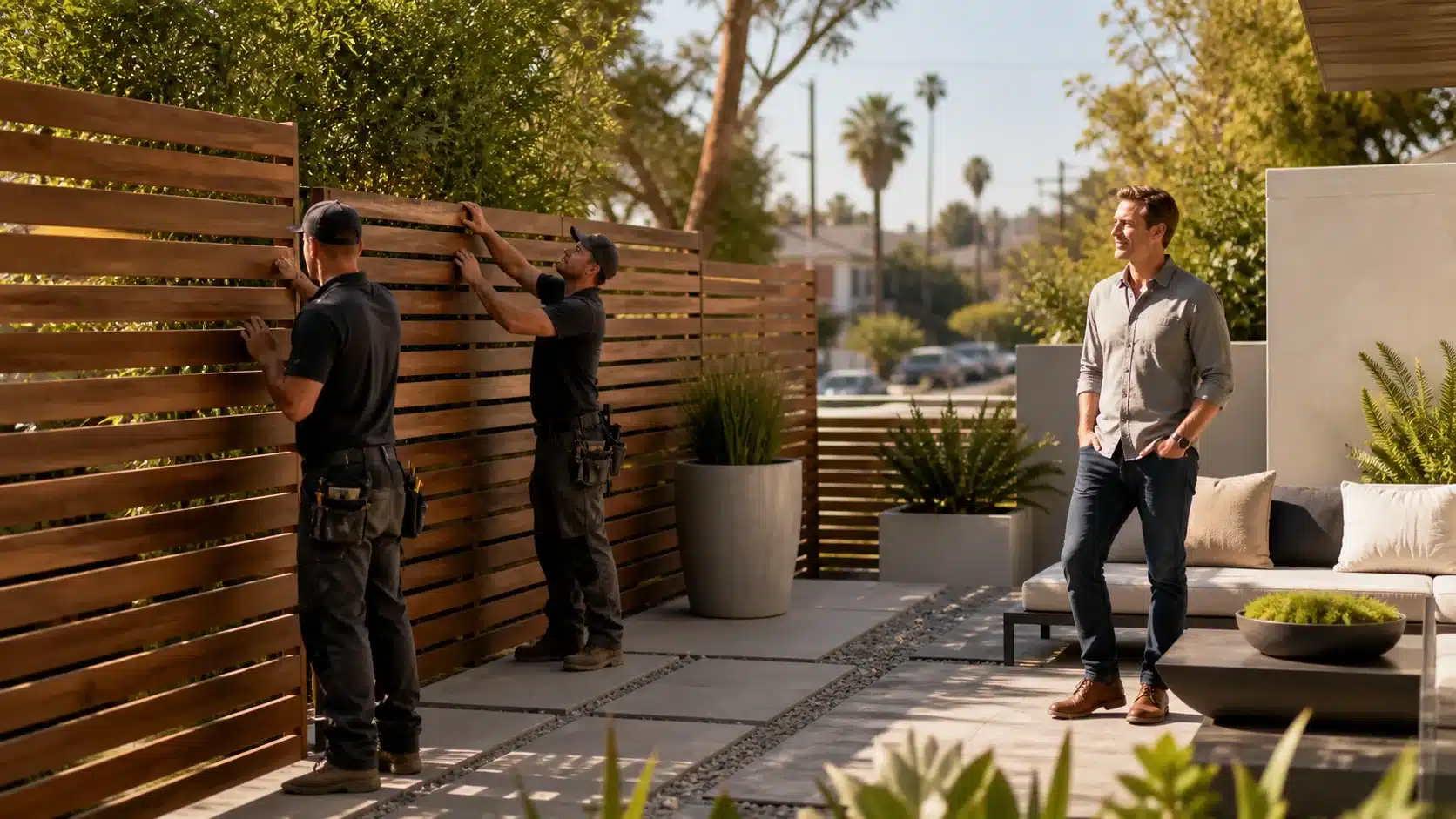
Once the main layout is set, walls and fences become your next big tools. For sound control, height and mass matter more than pure thickness. Taller, heavier, and more solid usually means better blocking.
Common options include:
- Solid wood fences with tight boards and minimal spacing
- Stucco over masonry walls that offer both mass and a finished look
- Concrete block walls dressed with decorative finishes or veneers
- Composite fencing with overlapping boards for fewer gaps
Whatever you pick, sound leaks are the enemy. Noise will slip through even small openings, so it helps to:
- Avoid gaps under gates, between boards, and where materials change
- Use overlapping boards or inserts where slats meet
- Add textured cladding, trellises, or slatted screens on the yard side to break up reflected sound
Planting is the softer side of sound control. Plants do not block noise the way a wall does, but they help absorb and scatter it. They also create privacy and a calmer feeling, which makes noise feel less sharp and stressful.
Good planting ideas for Los Angeles include:
- Dense hedges along fences or walls to add a green sound blanket
- Layered shrubs of different heights to fill space and filter sound
- Tall grasses that sway and rustle, softening the soundscape
Since our area stays warm most of the year, you can choose plants that look good across fall and winter, so your yard feels lush during holiday gatherings and outdoor dinners.
Water Features and Hardscape That Soften Noise
Water can be a powerful way to mask unwanted noise. The steady sound of moving water does not remove traffic, but it helps your ear focus on something more pleasant and steady.
Some backyard-friendly water features include:
- Sheer descent waterfalls spilling into a pool or pond
- Scuppers or spouts that pour into a trough, basin, or pool
- Bubbling urns or bowls that work well in smaller yards
- Wall fountains that double as a design feature
Placement matters just as much as the type of water feature. For stronger masking, it helps to:
- Position the feature between the main noise source and your seating
- Choose pumps with adjustable flow so you can set the sound level
- Integrate water into a pool or modern hardscape so it feels part of one design
Hardscape choices also play a role in how bright or echoey a yard feels. Very smooth, hard surfaces bounce sound, while more textured, porous ones break it up.
You can soften sound with:
- Textured pavers instead of large, slick concrete slabs
- Decomposed granite or gravel in select areas
- Porous stone that has natural variation
Then, layer in soft items that soak up sound, such as outdoor rugs, seat cushions, and fabric canopies or shade sails. These are small touches, but together they can cut down on echoes and sharp noise in a backyard remodel in LA.
Build a Quieter Backyard with a Sound-Smart Design Plan
A quieter yard does not come from one tall wall alone. It comes from combining layout, structures, fences, planting, water, and materials into one clear plan that fits your house and your block. When each piece works with the others, you get a backyard that feels calm without losing light, air, or style.
Fall is a smart time to think through that plan. Many people are wrapping up summer, getting ready for holiday gatherings, and thinking about how they want their outdoor space to work next spring. Starting design and permitting now often lines up construction and planting with cooler months, so your yard has time to settle in before you host your next big event.
Transform Your Backyard Into a Relaxing LA Retreat Today
Ready to elevate your outdoor space into a place you actually want to spend time in? At Precise Home Builders, we listen closely to how you live so your backyard remodel in LA feels both beautiful and practical. Tell us about your vision, and we will guide you through clear design options, timelines, and budgets. Schedule a consultation today through our contact page to get your project moving.
