
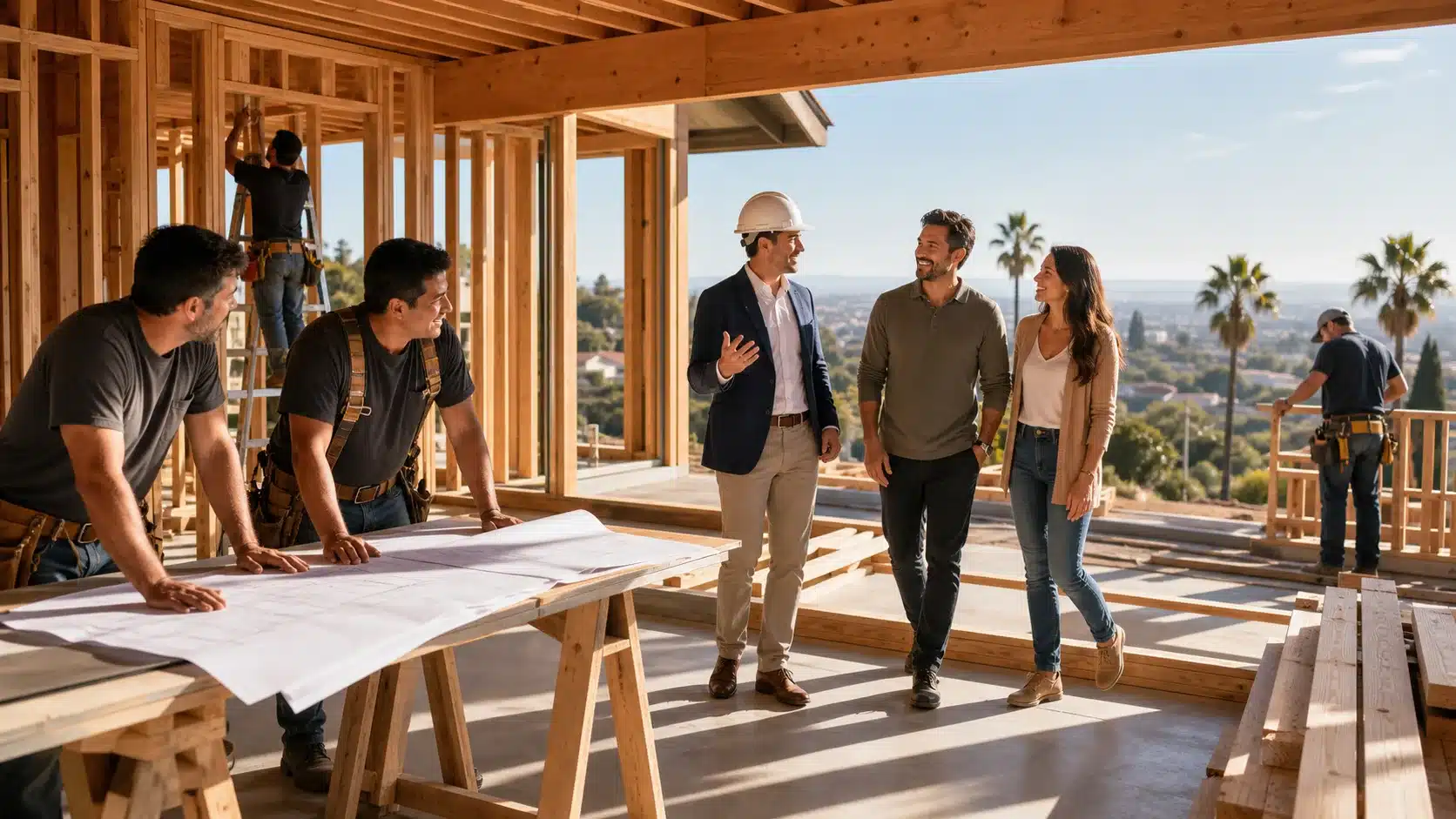
Building a new home in Los Angeles should feel exciting, not confusing. When you know what to expect from a new home builder in Los Angeles, you can plan with confidence, ask better questions, and avoid a lot of stress later on.
In this guide, we will walk through the full process, from the first meeting to move-in. We will talk about how local rules shape your design, how a good team keeps your budget clear, and what day-to-day construction really looks like in our city.
Build with Confidence in a City of Endless Options
Los Angeles is full of options, both for lots and for builders. There are flat city lots, narrow infill lots, hillside properties, and homes in wildfire or coastal zones. Each one comes with its own rules and limits, and that can feel like a lot when you are just trying to build a safe, beautiful place to live.
Here, you have to think about seismic design, slope stability, strict plan check, and even how fire access or driveway slopes affect what you can build. That is why working with a design-build contractor that actually understands Los Angeles is so helpful. You want a team that knows how to turn your wish list into a design that can pass review and then be built on time.
As a long-established design-build firm based in the area, we focus on full custom homes and large remodels, including backyards, pools, additions, and ADUs. Our goal is to give you a clear path from idea to keys in hand, with strong communication, thoughtful design, and support through planning and permitting.
Your First Consultation and Vision Planning
Your first meeting with a new home builder in Los Angeles should feel like a real conversation, not a sales pitch. We typically start by learning about you, your lot or the lot you are considering, and how you want to live in the home.
In that first conversation, we will usually cover specific basics such as:
- How many people will live in the home and how they use space
- Must-have rooms, views, and features
- Lifestyle needs like work-from-home, outdoor entertaining, or multigenerational living
- Your rough budget range and timing for move-in
To make the meeting more productive, it helps a lot when you bring:
- Photos or links of homes you like
- A list of must-haves and nice-to-haves
- Any deal-breakers, such as stairs, small yards, or limited parking
After the initial discussion, the next step is a basic site and feasibility review. This is where we begin translating your ideas into what is realistically buildable on your specific lot, based on local constraints and property conditions. We look at:
- Setbacks and height limits
- Slopes, retaining walls, and drainage
- Utility access and easements
- ADU potential and parking rules
- Any HOA rules that may affect design
From there, we help you rank priorities so the design and budget stay aligned. In practice, that often means deciding between tradeoffs like:
- More square footage or higher-end finishes
- Bigger yard or more parking
- Best possible views or more privacy
- Indoor-outdoor flow or extra storage
In Los Angeles, it is common to start vision and planning long before your target move-in. If you start design and planning in the fall for a future move date, you are giving yourself time for design, revisions, and the city review process without constant rush.
Design-Build Process and Budget Transparency
Working with a design-build contractor means the same team handles design, engineering, and construction. This keeps communication tight and simplifies your experience. You are not stuck relaying messages between an architect, an engineer, and a separate builder.
As the design begins, we price the project in stages so you are not forced to make major decisions in the dark. Early sketches provide very rough ranges, and then as plans get more detailed, pricing becomes more precise. Throughout that process, you see how choices affect your total investment, including:
- Square footage and number of stories
- Structural systems that may be needed for hillside or seismic conditions
- Finish levels in kitchens, baths, and flooring
- Extras like pools, outdoor kitchens, or ADUs
- Solar integration and energy-efficient systems
A professional proposal should always include the key components below so you can understand what you are actually buying and how the budget is being built:
- Clear scope of work and drawings
- Itemized allowances for things like tile, fixtures, and appliances
- Realistic contingencies, not just a best-case guess
- A payment schedule linked to clear milestones
- Notes on what is included, like permits, inspections, and utility coordination
Transparency up front helps protect you from low bids that later turn into a series of change orders. It also makes it easier to adjust design choices before you start building, instead of during construction when changes are more disruptive.
Navigating Los Angeles Permits and Inspections
One of the biggest surprises for many homeowners is how detailed Los Angeles approvals can be. A new home builder in Los Angeles should guide you through this, not leave you to figure it out alone.
Depending on your lot, you may deal with:
- The Department of Building and Safety
- Planning approvals and possible neighborhood input
- Hillside, coastal, or wildfire zone requirements
- Driveway, grading, drainage, and street work reviews
Plan check can take time, especially if revisions are needed. Starting design and permitting in the fall often sets you up for a smoother construction start later, which can help with scheduling around holidays and inspector availability.
Behind the scenes, your builder should be coordinating the technical documentation and compliance items that support approvals and inspections, including:
- Structural and energy calculations
- Title 24 energy reports
- Soil and geotechnical reports where needed
- Required city inspections throughout the build
You should not have to track every technical step, but you should get clear updates at key points. That typically includes when permits are submitted, when plans are approved, when major inspections are passed, and when revisions are required.
Construction Experience, Quality, and Communication
Once building starts, you should see a well-managed jobsite. That usually means:
- Organized materials and a clean work area
- Safety rules followed by everyone on site
- Regular crews you recognize, not random faces every day
- Qualified trades for specialty work like pools, hardscape, and solar systems
We often handle full-property transformations, so we think about how the house, yard, pool, and ADU all work together as one space.
Good communication is just as important as good craftsmanship. Most homeowners can expect:
- Weekly or biweekly progress updates
- Site walks at big stages like framing, rough-ins, and pre-drywall
- A main point of contact who knows your project in detail
If something unexpected appears, such as buried utilities, soil issues, or a code update, your builder should respond in a clear and structured way. That means they should explain the issue in plain language, share options and their cost and schedule impact, and put any changes in writing before work continues. The goal is to solve problems with you, not argue about who is to blame.
Designing for LA Lifestyle’s Indoor-Outdoor, ADUs, and Solar
A new home builder in Los Angeles should think beyond walls and roofs. Life here spills outside, especially during fall gatherings and holiday weekends.
For indoor-outdoor living, we often look at:
- Large sliders or folding doors to patios
- Covered outdoor seating for shade and comfort
- Outdoor kitchens or bars for hosting
- Pools, spas, and water features
- Fire features that extend evening use of your yard
ADUs are also a big part of planning, and a good design should account for how the spaces will function together over time. That typically includes:
- Privacy between the main home and ADU
- Separate entries and paths
- Sound control between units
- Flexibility for guests, rental, or family in the future
On the efficiency side, current homes in our area often include:
- Solar-ready roofs or fully integrated solar
- EV charging in the garage or carport
- Efficient HVAC and insulation that meet local energy codes
- Drought-conscious landscaping and smart irrigation
- Details that support seismic and wildfire resilience where needed
Ready to Build in LA: How to Vet and Choose Your Team
When you are ready to choose a new home builder in Los Angeles, good questions can save you from big headaches. Helpful things to ask include:
- How many projects have you completed in my city or neighborhood?
- How do you handle design, engineering, and construction under one process?
- Who handles permits and city coordination on your team?
- What does your typical timeline look like from first meeting to move-in?
- How do you communicate during construction and who will be my main contact?
- How do you handle changes or unexpected site issues?
- Can I see recent custom homes, additions, or ADUs you have built?
You will also want to watch out for red flags that can signal poor planning, weak documentation, or lack of local experience. Common warning signs include:
- Vague or short contracts with little detail
- Refusal to talk about permits or city reviews
- No recent local references or projects to show
- Unclear allowances or missing line items
- A price that is far below other qualified bids without a clear reason
At Precise Home Builders, we focus on giving homeowners a clear, guided process from the first vision talk through full completion of the home and property. Starting design-build planning early is one of the best ways to match your future move-in goals with a smoother, more predictable experience in Los Angeles.
Get Started With Your Project Today
If you are ready to bring your vision to life, Precise Home Builders is here to guide you through every step. See what makes us a trusted new home builder in Los Angeles and how we focus on quality, communication, and on-time delivery. Share your goals, budget, and timeline, and we will help you map out a clear, practical plan. Reach out through our contact page to schedule a consultation and get started.
