
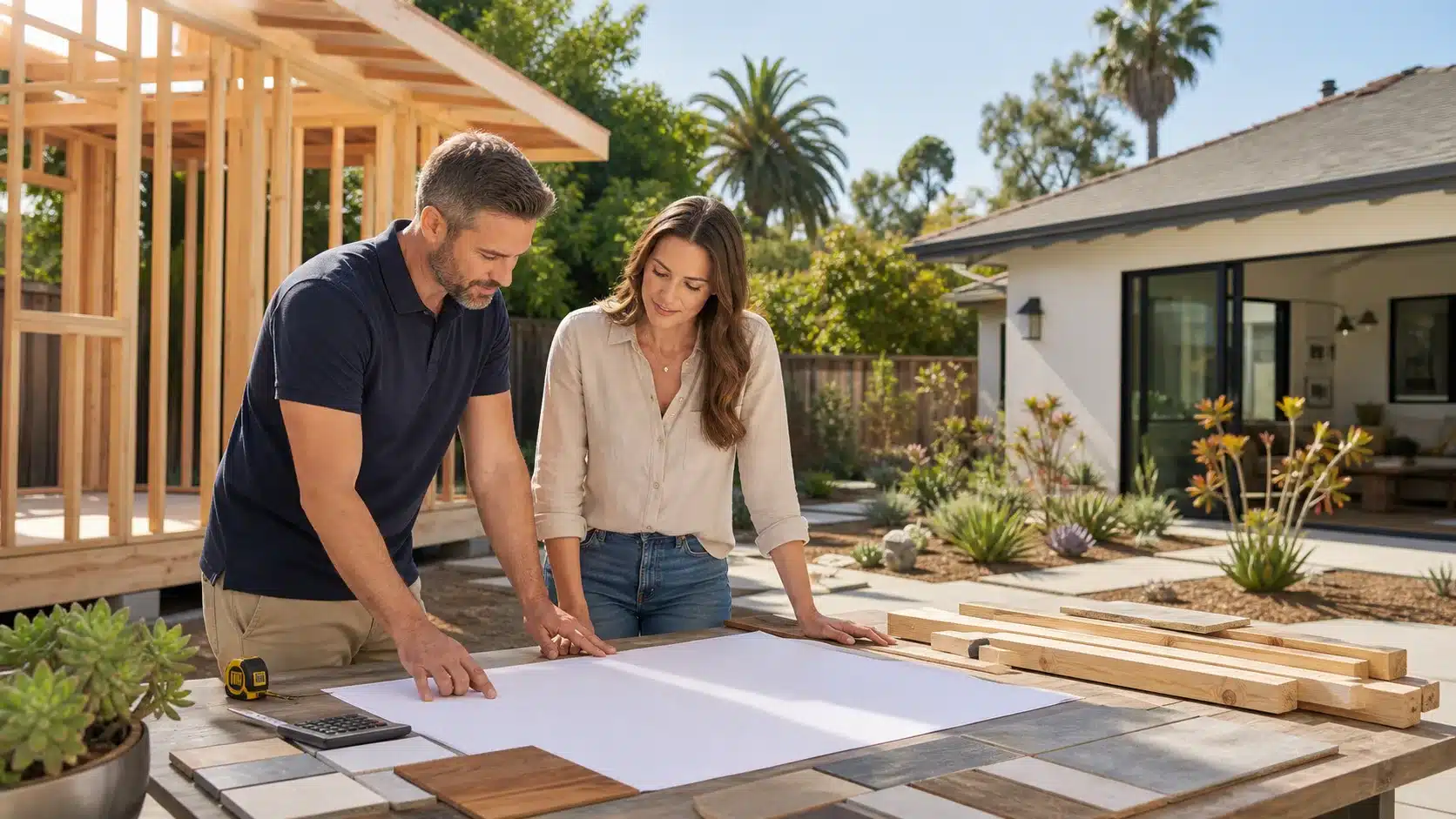
Turn Your Backyard Into Income-Producing Living Space
Building an ADU in your Los Angeles backyard is one of the most practical ways to add living space and long-term value to your property. An ADU, or accessory dwelling unit, is a self-contained small home on the same lot as your main house. It can be used as a rental, a suite for family, or a separate space to work from home.
Many homeowners are looking at that underused corner of the yard and seeing a chance for extra income or more breathing room for their household. The key is planning the money side early. A smart budget helps you get the space you want, keep stress low, and avoid costly surprises along the way.
In this guide, we walk through what drives ADU construction costs in Los Angeles, how to think about your budget, what hidden items to plan for, and smart ways to save without cutting corners. We also explain how working with a design-build team can keep everything aligned from the first sketch to move-in day.
What Drives ADU Costs in Los Angeles Backyards
Every backyard ADU is different, but there are a few big levers that shape your total cost.
Size, layout, and design details matter. As the square footage grows, so do materials, labor, and finish choices. A simple studio with one bathroom costs less than a two-bedroom ADU with two bathrooms and a full kitchen. Certain features also tend to increase complexity and price, including:
- Extra bathrooms
- Complex layouts with many corners
- Vaulted or high ceilings
- Large sliding doors or window walls
- Custom cabinetry or built-ins
Site conditions and existing utilities also play a big role in what you’ll spend. Some lots are almost ready for construction, while others need more prep or upgrades before the build can move forward. Budget-impacting factors often include:
- Sloped yards that require grading or small retaining walls
- Limited access that makes it hard to bring in trucks or equipment
- Older electrical or sewer lines that need repair or upgrades
- Long distances from the main house to the ADU location
The type of ADU you choose also changes how the structure is built and what it requires. Common options include:
- Detached backyard unit: Often starts from the ground up with its own foundation, framing, and roof.
- Garage conversion: Uses some or all of the existing structure, which can save on framing, but may need structural upgrades and new insulation.
- Above-garage build: Adds living space over an existing or new garage, which can mean stronger foundations and framing to support the added load.
All of these pieces come together to shape the scale and complexity of the project, which then shapes the budget.
Building a Realistic ADU Budget From Day One
A solid budget starts with understanding the different parts of the work, not just the structure itself. We like to think of it in three groups: core construction and design, soft costs and city requirements, and seasonal or market factors.
Core construction and design cover the essential work of planning and building the ADU, along with the finishes and systems that make it livable. This usually includes architectural design and drawings, structural and other engineering as needed, and the full build-out from framing through interiors. In practice, that scope typically includes:
- Architectural design and drawings
- Structural and other engineering as needed
- Framing and roofing
- Windows and doors
- Exterior finishes like siding or stucco
- Interior finishes like flooring, cabinets, counters, and paint
- Systems like HVAC, plumbing, and electrical
Soft costs and city requirements in Los Angeles are easy to overlook early on, but they can meaningfully affect the total. These are the administrative and compliance items that support the build and help you get to approval and final sign-off. You can expect things like:
- City permit fees
- Plan check and review costs
- Required reports such as surveys or soils reports, depending on your lot
- Possible utility or connection fees
Seasonal and market factors also affect your plan. Starting an ADU project as fall begins often lines up well with school schedules and holiday plans, and the steady local weather helps avoid weather-related downtime. Material prices and labor availability can change through the year, so getting a clear proposal and schedule early helps you understand how timing will affect the bottom line.
Hidden Expenses Los Angeles Homeowners Often Overlook
Even with a careful plan, some items are easy to miss when you first think about ADU construction in Los Angeles. These costs tend to show up once you begin confirming utility capacity, mapping the path of new lines, and preparing the site for equipment and crews.
Utility upgrades and trenching can be a surprise, especially because many homes were not built with extra load in mind. Common needs include:
- Upsizing the electrical panel
- Extending or upgrading gas lines
- Running new water and sewer lines
- Trenching those utilities across your yard
Site prep and access challenges can also add cost and time before construction even starts. Depending on what’s currently in the backyard and how easy it is to reach the build area, you may need:
- Demolition of old sheds, patios, or outbuildings
- Tree trimming or removal
- Temporary fencing or protection for neighbors
- Extra labor when equipment cannot get close to the work area
Then there is the day-to-day impact on how you live during construction. While a backyard ADU is usually less disruptive than a full-home remodel, it still brings activity to your property and may require some adjustments. You may want to budget for:
- Short-term storage if yard items need to be moved
- Protecting existing landscaping or pool areas
- Noise and dust control, especially close to outdoor living areas
- Adjustments to parking or access to your driveway
Planning for these early helps you build a cushion into your budget rather than reacting later.
Smart Ways to Save Without Compromising Quality
Saving money on an ADU should not mean cutting corners in ways that cause problems later. The trick is to design with cost in mind from the start, so the biggest cost drivers are handled through smart planning rather than last-minute compromises.
Design choices that often help keep costs in check include:
- Right-sizing the ADU so it feels comfortable without extra unused space
- Keeping the footprint simple, with fewer corners and jogs in the walls
- Using straightforward rooflines instead of complex shapes
- Placing the ADU to shorten utility runs where the site allows
Finish choices also matter, and they’re often where you can either protect value or accidentally create future maintenance issues. Some areas are worth a higher investment because they affect comfort and long-term performance. In general, we suggest putting more attention into:
- Windows and doors
- Insulation and air sealing
- Waterproofing and drainage
- Key plumbing and lighting fixtures that get daily use
At the same time, many homeowners choose more budget-friendly options in areas where there’s plenty of good-looking, durable mid-range product available. Areas where many homeowners choose more budget-friendly options include:
- Stock or semi-custom cabinets instead of fully custom
- Mid-range tile and flooring that still looks great and holds up well
- Thoughtful appliance choices that balance features and cost
Working with a design-build team that handles both design and construction helps all of these decisions stay aligned. When the same team that will build your ADU is involved in planning, it is easier to keep the design realistic, spot cost drivers early, and reduce change orders once work begins.
Financing Options and Long-Term Payoff
Once you have a handle on what your ADU might cost, the next question is how to pay for it, and how it might pay you back over time.
Common ways Los Angeles homeowners fund ADUs include:
- Home equity lines of credit
- Cash-out refinance
- Renovation or construction-focused loans
- Savings or a mix of cash and financing
Each option has pros and cons related to interest rates, flexibility, and how quickly you want to finish the project. A good first step is to talk with a lender who understands local ADU projects so you can compare monthly payments with your comfort level.
To think about long-term payoff, many people start by looking at the most common return paths, income, savings, and lifestyle value, and then comparing those to monthly payments and ongoing costs. Many people look at:
- Possible rental income from a long-term tenant
- Savings from housing a family member instead of paying for separate rent
- Value of having a dedicated office or studio if you work from home
You can compare those numbers to your monthly loan payment and ongoing costs like utilities and maintenance. Even if you plan to use the ADU for family first, it can be smart to design it so it can also function as a future rental.
Planning for flexibility from the start helps protect your investment. Features that often help include:
- A layout that works for both long-term stays and short visits
- Comfortable, step-free entries wherever possible
- Storage and closet space that renters and guests both appreciate
Thinking this way turns your ADU into a long-term tool that can shift as your life changes, not just a single-use project.
Get Started With Your Project Today
If you are ready to unlock extra living space and long-term value on your property, our team at Precise Home Builders is here to guide you through every step of ADU construction in Los Angeles. We will help you align design, budget, and timeline so your new unit feels like a seamless extension of your home. Have questions about feasibility, permits, or next steps for your specific lot and goals? Reach out through our contact page to schedule a no-obligation consultation.
