
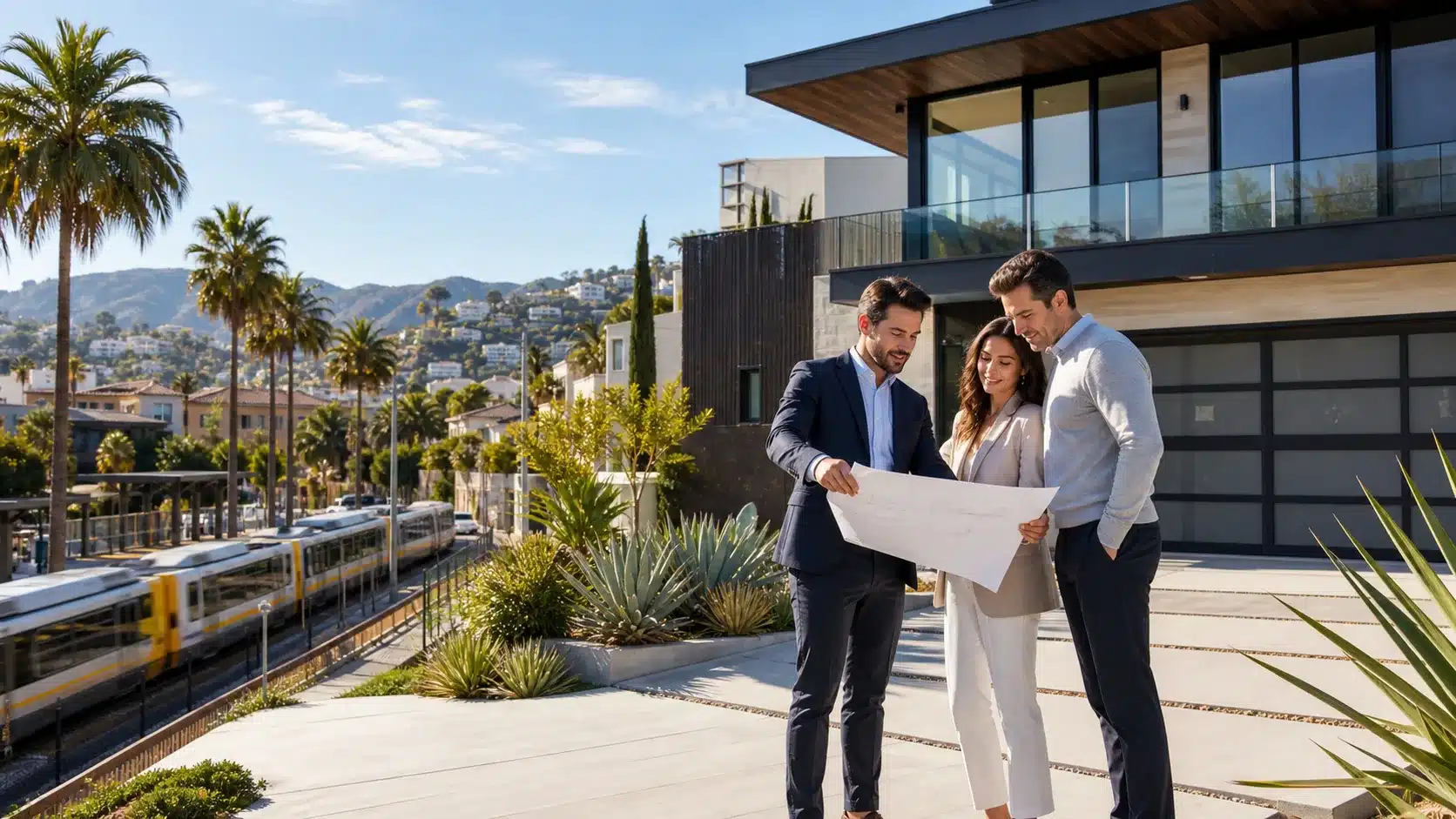
Why Transit-Friendly Custom Homes Are Surging in LA
Living close to good transit in Los Angeles is no longer just a nice bonus. For many buyers building custom homes in Los Angeles, it is now one of the top must-haves. Shorter drives, less time in traffic, and more ways to get around are changing what people ask for when they plan a new home.
Professionals want faster ways to reach job centers without sitting on crowded freeways. Families with teens like that older kids can get to school, sports, and friends on their own. Many downsizing Boomers are ready to trade long drives for quick access to trains, buses, and walkable streets. All of this shifts what a custom home near transit needs to deliver.
Transit access also connects directly to lifestyle. With less time stuck in a car, there is more time to relax at home, walk the dog, or enjoy neighborhood cafes. Being close to Metro lines, bus corridors, and bike routes opens up entertainment districts without the headache of parking. As Los Angeles keeps changing, homes near strong transit often feel more future-ready and can stay more attractive when it is time to sell.
Choosing the Right LA Neighborhood Near Transit
Picking the right neighborhood is the first big step. Transit lines and stops are not all the same, and every buyer has different needs. Before you fall in love with a lot, it helps to map out how you actually move through the city.
Here are some smart things to look at while you scout areas for custom homes in Los Angeles:
- Existing Metro rail and busway stops that match your daily routes
- Planned or under-construction lines that may grow access over time
- Frequent bus corridors, not just a single slow line
- Bike lanes and protected paths that connect to job centers or campuses
- Reasonable commute times door-to-door, not just on a map
Density is another big piece. Many people want the perks of walkability without feeling squeezed by noise and crowds. To get a real sense of this, it helps to:
- Walk the area at morning rush hour, late evening, and on weekends
- Notice how loud traffic, trains, and late-night activity actually are
- Watch how street parking fills up at night and during events
- Pay attention to lighting, sidewalks, and how comfortable you feel walking
For long-term comfort and resale, transit cannot be the only factor. You also want to weigh:
- School options that fit your family plans
- Parks, dog areas, and open space for fresh air
- Grocery stores, pharmacies, and daily errands within a short trip
- Overall community feel, from street trees to local businesses
The sweet spot is a neighborhood that is transit rich but still feels like home, not a noisy corridor you want to escape from.
Designing Custom Homes in Los Angeles Around Mobility
Once you pick a neighborhood, the design of your custom home can make transit-friendly living work smoothly day to day. Good design makes it easy to leave the car behind when it makes sense, and still supports you when you do drive.
Floor plans for transit-centric living often include:
- A generous entry or mudroom for bikes, scooters, and helmets
- Storage near the front door for work bags, sports gear, and groceries
- A flexible office or studio space for hybrid or remote work
- Easy paths from entries to kitchen and laundry so you can unload fast
If you are close to a busy corridor, noise planning matters a lot. Some helpful strategies include:
- Placing bedrooms and quiet rooms on the side facing away from traffic
- Using sound-rated windows in the loudest areas of the home
- Designing fence lines, hedges, and trees as sound and privacy buffers
- Positioning outdoor seating away from the noisiest edges of the lot
Sustainability often pairs well with transit-focused homes. When driving less, many owners also want:
- EV charging in the garage or carport
- A solar-ready or solar-friendly roof layout
- Safe outdoor storage for e-bikes, strollers, and wagons
- Shaded patios and covered entries so waiting for a rideshare or walking to transit is more comfortable in the sun
Thoughtful design turns transit access from a simple map feature into a real lifestyle upgrade.
Budget, Zoning, and ADUs Near Transit Lines
Lots close to strong transit can come with different rules and expectations. Zoning in transit-oriented corners of Los Angeles may allow more housing types, taller buildings, or reduced parking in some cases, while also adding extra review steps or design guidelines. This can affect how your custom home project is planned and how the budget is structured.
Near transit lines, it is also common to think about accessory dwelling units. ADUs and junior ADUs can be helpful near frequent transit because:
- Renters often value quick access to buses and trains
- Multigenerational households can move around the city without extra cars
- Guest spaces are more convenient when visitors can use transit
When you bring transit into the mix, it becomes even more important to have a clear plan for:
- Lot size and how much yard you want to keep open
- Height limits and setbacks that shape what you can build
- Parking needs for your household plus any ADU users
- How you want to use the backyard, from quiet retreat to outdoor entertaining
Working with a design-build team helps tie these pieces together so you are not surprised by what the lot and zoning will allow.
Evaluating Resale Value and Long-Term Demand
Buyers thinking long term often ask how transit will affect future value. While no one can promise what the market will do, history in many cities shows that homes near reliable transit tend to stay attractive when driving gets more expensive or more stressful.
Future buyers of custom homes in Los Angeles near transit will likely pay close attention to features such as:
- Energy-efficient windows, insulation, and systems
- Flexible layouts that can shift between office, guest, or hobby space
- Comfortable outdoor hangout areas for friends and family
- Smart storage for bikes, boards, sports gear, and work tools
Transportation habits are changing too. Micro-mobility, like scooters and e-bikes, is growing. Some areas may change parking policies or add new transit lines. You can prepare for this by:
- Planning space for more bike and gear storage than you think you need
- Leaving room in electrical panels and garages for future EV chargers
- Considering how easy it would be to add shade structures, gates, or storage sheds later
Thinking ahead helps your custom home stay flexible as the city and its transit system keep evolving.
Partnering with a Design-Build Team for LA Transit Homes
Designing around transit adds extra layers of decisions, from picking the right block to shaping sound, light, and outdoor space. A local design-build contractor that knows Los Angeles can coordinate site selection, design, permitting, and construction so all those pieces work together instead of fighting each other.
At Precise Home Builders, we have been working on custom homes, remodels, room additions, ADUs, and backyard projects across the area for many years. Our design-build approach means one team guides the project from first ideas through construction. A dedicated project manager helps coordinate the architect, engineers, and trade partners so the home fits the lot, respects city rules, and supports the transit-focused lifestyle you want.
When you are ready to talk about a transit-friendly custom home, it helps to come prepared with:
- A few target neighborhoods or transit lines you like
- A list of daily trips you make and how you hope those trips will change
- Notes on your ideal home size, number of bedrooms, and work spaces
- Thoughts about adding an ADU now or in the future
From there, we can work together to shape a home that fits how you live today and how you expect to move through Los Angeles in the years ahead.
Get Started With Your Custom Los Angeles Home Today
If you are ready to design a home tailored to your lifestyle, our team at Precise Home Builders is here to guide you from first sketches to final walkthrough. Explore how we approach building custom homes in Los Angeles to understand what is possible for your lot, budget, and timeline. Then contact us so we can discuss your ideas, answer your questions, and outline clear next steps for your project.
